Aldar Properties: How Abu Dhabi’s Leading Developer Has Built a Diversified Real Estate Business
Aldar Properties PJSC has grown from an Abu Dhabi-focused developer into one of the UAE’s largest integrated real estate groups.
The company was established in 2004 and is listed on the Abu Dhabi Securities Exchange under the ticker ALDAR. Its business now covers residential development, master planning, investment properties, hospitality, education, property management and international real estate.
What makes Aldar different from a conventional property developer is the structure of its business.
It sells homes through Aldar Development while also retaining and managing income-producing assets through Aldar Investment. This gives the group two distinct sources of earnings.
The development arm generates revenue from property sales and project management. The investment arm creates recurring income from assets such as retail, offices, rental housing, logistics, hotels and schools.
That model has become increasingly important as Aldar expands across Abu Dhabi, Dubai, Ras Al Khaimah, Egypt and the UK.
Aldar at a Glance
As of the first half of 2026, Aldar reported several major numbers that show the scale of the business:
- AED 71.6 billion development revenue backlog
- AED 59.9 billion of the backlog located in the UAE
- AED 56 billion in Aldar Investment assets under management
- AED 20 billion develop-to-hold pipeline
- AED 4.9 billion net profit after tax in H1 2026
- AED 12.1 billion group development sales in H1 2026
- AED 7.6 billion UAE sales to overseas and expatriate buyers
- 27 schools owned and managed through Aldar Education
- More than 26,000 homes created across Abu Dhabi
- More than 105 projects listed across Aldar’s wider property platform
These figures are more useful when viewed together.
Aldar is no longer dependent on selling apartments and villas alone. It has built a broader property platform that combines development, ownership and management.
Two Businesses Drive Aldar
Aldar’s operating model is built around two main businesses.
Aldar Development
Aldar Development is responsible for creating residential communities, masterplans and large-scale developments.
The business covers:
- Residential development
- Master planning
- Commercial development
- Government housing and infrastructure projects
- Project management services
- International development through SODIC and London Square
The development business creates revenue when homes and other properties are sold.
But the important number for understanding future revenue is the development backlog.
At the end of June 2026, Aldar had AED 71.6 billion in development revenue backlog. Around AED 59.9 billion came from the UAE. Aldar said the UAE backlog had an average duration of 29 months.
This provides visibility into future revenue because much of that contracted development work has already been sold.
Aldar Investment
Aldar Investment works differently.
Instead of selling every asset, Aldar retains selected properties and earns income from them over time.
The platform covers four major areas:
- Investment Properties
- Aldar Hospitality
- Aldar Education
- Aldar Estates
Its assets include retail centres, offices, residential buildings, industrial and logistics facilities, hotels and education assets.
By H1 2026, Aldar Investment’s AUM had reached AED 56 billion. The business generated AED 4.2 billion in revenue and AED 1.8 billion in adjusted EBITDA during the first six months of 2026.
This recurring-income business changes the financial profile of the group.
Property sales can vary from one launch period to another. Rental, hospitality, education and management income can provide a more recurring revenue base.
Aldar’s Development Model Goes Beyond Individual Projects
Aldar’s strength is closely linked to master planning.
Instead of developing isolated buildings, the company has built large communities around transport links, retail, schools, leisure facilities, parks and public spaces.
This approach is particularly visible across Abu Dhabi.
Saadiyat Island represents the luxury and cultural side of the portfolio.
Yas Island combines entertainment, leisure and residential communities.
Al Raha Beach offers a waterfront residential and commercial environment.
Al Ghadeer serves a different market, with family housing positioned between Abu Dhabi and Dubai.
The same strategy is now being applied to Dubai through Aldar’s partnership with Dubai Holding.
This matters because a masterplanned community can generate several revenue streams from the same location.
A developer can sell apartments and villas. It can also retain retail, offices, rental housing and hospitality assets.
Over time, the surrounding infrastructure can also support demand for future phases.
Saadiyat Island Has Become a Major Aldar Luxury Market
Saadiyat Island is one of Aldar’s most important destinations.
The location combines beaches, cultural institutions, hospitality and luxury residential development.
The wider cultural district includes institutions such as Louvre Abu Dhabi, while Aldar’s residential portfolio includes projects such as Mamsha Al Saadiyat, Saadiyat Lagoons and newer luxury developments.
The island is now moving into another major development phase through Marsa Al Saadiyat.
Aldar announced Marsa Al Saadiyat in July 2026 with a gross development value of approximately AED 100 billion. Aldar is expected to develop around AED 60 billion of that value.
The scale is important.
Marsa Al Saadiyat is positioned as the final major phase of the Saadiyat Island masterplan. It extends the island’s residential, hospitality, marina and leisure offering.
The first residential launch is Talay.
In September 2026, Aldar announced Talay with 351 standalone villas. The project forms the first residential community within Marsa Al Saadiyat. (Aldar)
For the Abu Dhabi luxury market, this creates a new supply segment within one of the emirate’s strongest established destinations.
Yas Island Shows Aldar’s Family and Leisure Strategy
Yas Island represents a different part of Aldar’s portfolio.
The island has a strong connection with entertainment and tourism through attractions such as Yas Mall, Yas Marina Circuit and major theme parks.
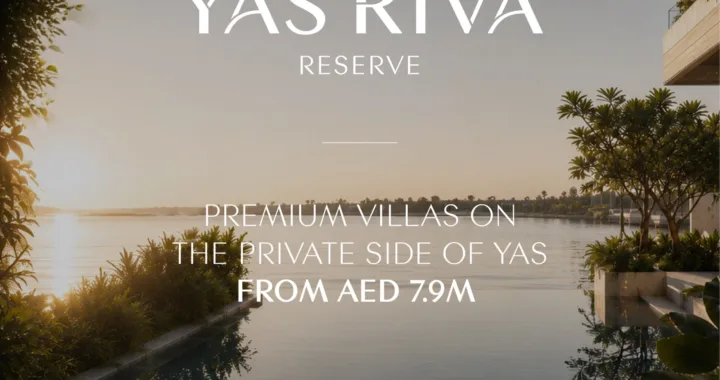
Aldar has developed several residential communities here, including Yas Acres, Yas Golf Collection, Waters Edge, Mayan and other projects.
The strategy is not limited to luxury villas.
Aldar has developed apartments, townhouses, villas, offices and retail assets across the island.
This creates a broader housing market.
Families can choose larger homes. Investors can target apartments. Businesses can use commercial space. Visitors support the hospitality and retail ecosystem.
In 2026, Aldar also launched Yas Park Place, followed by further residential activity on Yas Island. The company reported that 80% of the released Yas Park Place units had been sold by the first quarter results period, generating more than AED 800 million in sales.
Aldar later announced Yas Point, an AED 6 billion mixed-use waterfront development.
The first development, The Canopies, generated AED 1.5 billion in sales at launch in July 2026. (Aldar)
This shows how Aldar continues to add new residential products even within established destinations.
Dubai Is Becoming a Second Growth Engine
Aldar’s Dubai expansion is one of the biggest strategic changes in the company’s recent history.
The company entered Dubai through a joint venture with Dubai Holding in 2023.
The first communities were Haven, Athlon and The Wilds.
The projects are differentiated by their planning concepts rather than relying only on traditional luxury positioning.
Haven focuses on wellness and nature.
Athlon is built around active living, walking and cycling.
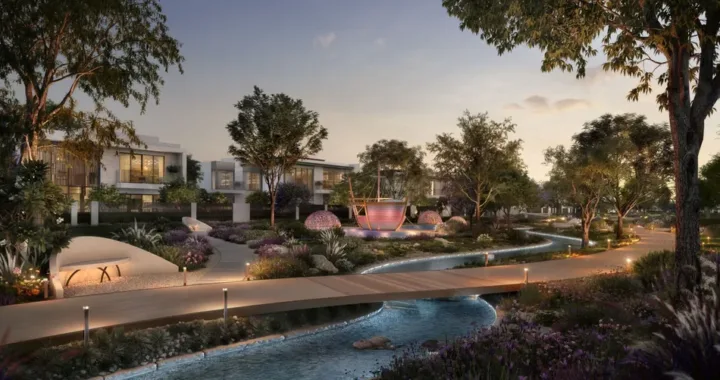
The Wilds places greater emphasis on greenery, biodiversity and outdoor spaces.
The initial launches generated strong sales.
The next phase is much larger.
In February 2026, Aldar and Dubai Holding expanded their partnership with two additional Dubai land plots. The projects are expected to deliver almost 14,000 homes with combined GDV above AED 38 billion.
One site covers about 4 million square metres along Dubai’s eastern growth corridor opposite Nad Al Sheba.
The second site is at Palm Jebel Ali and will include an ultra-luxury waterfront development.
This expansion changes the scale of Aldar’s Dubai presence.
The company is moving from a small number of residential launches toward a larger development platform.
The Wilds Shows How Aldar Is Testing New Residential Concepts
The Wilds is particularly useful for understanding Aldar’s Dubai strategy.
The project is located along Sheikh Mohammed Bin Zayed Road and combines villas and apartments with parks, trails and nature-focused amenities.
In February 2026, Aldar launched The Wilds Residences with 740 apartments and duplexes across six mid-rise buildings. (Aldar)
The first villa phase had already generated around AED 5 billion in sales within days of launch, according to Aldar. (Aldar)
The project also targets LEED Platinum and Fitwel 3-Star certifications.
That is significant because Aldar is using community design as a product differentiator.
The company is not selling the same residential concept across every location.
It is creating separate propositions around wellness, active living, nature, waterfront access and family housing.
Aldar Investment Creates a Different Financial Base
Aldar’s retained assets deserve as much attention as its residential launches.
The Investment platform had AED 56 billion in AUM by H1 2026. (Aldar)
Its investment property portfolio had 95% occupancy during H1 2026.
Commercial assets were even stronger, with 99% occupancy reported for the period.
Industrial and logistics assets had 97% occupancy.
These figures show why Aldar continues to allocate capital toward income-producing property.
Retail is another important component.
Yas Mall remains one of the group’s major retail assets. Aldar reported 96% occupancy at the mall during H1 2026. (Aldar)
The portfolio also includes offices, residential rental assets and logistics facilities.
This diversification reduces the company’s reliance on a single property type.
Hospitality Adds Tourism Exposure
Aldar’s hospitality platform includes hotels and leisure assets, particularly in Abu Dhabi and Ras Al Khaimah.
The portfolio gives Aldar exposure to tourism and business travel rather than residential sales alone.
However, hospitality income can be more sensitive to travel demand and external events.
Aldar’s H1 2026 results illustrate this difference.
Hospitality adjusted EBITDA declined 18% year-on-year to AED 140 million. Occupancy fell to 54%, while RevPAR declined 7% to AED 430. Aldar attributed the pressure partly to regional geopolitical developments.
This is an important counterpoint to the group’s strong overall performance.
A diversified property business can spread risk across sectors. But each sector still responds to different market conditions.
Education Gives Aldar a Long-Term Operating Business
Aldar Education adds another layer to the group.
As of H1 2026, the platform operated 27 owned and managed schools, mainly across the UAE.
Education is different from residential development.
A school can serve a community for many years. It can also strengthen demand for nearby family housing.
This creates an important link between Aldar’s development and investment businesses.
A new residential community with schools, retail and leisure facilities can offer a more complete local ecosystem.
For families, access to education can be a practical factor when selecting a home.
For Aldar, education can also become a long-term operating asset.
The Develop-to-Hold Strategy Is Becoming More Important
One of the clearest changes in Aldar’s business is the growth of its develop-to-hold strategy.
Under this model, Aldar develops an asset and retains it instead of selling it immediately.
The company then earns rental or operating income from that asset.
By H1 2026, Aldar’s develop-to-hold pipeline stood at around AED 20 billion
A major example is the partnership with Abu Dhabi’s Department of Municipalities and Transport.
The agreement covers 9,000 value housing rental units in Mohamed Bin Zayed City and Baniyas. The developments have a combined GDV of AED 2.8 billion.
This strategy has two advantages.
First, Aldar can increase its recurring income base.
Second, it can create assets that support long-term portfolio value after construction is complete.
The model also gives Aldar a reason to build across different price segments.
Its portfolio is therefore not limited to luxury housing.
International Expansion Adds Geographic Diversification
Aldar has also built international exposure.
In Egypt, its investment is linked to SODIC, which develops mixed-use communities.
SODIC generated AED 1.4 billion in sales during H1 2026, up 171% year-on-year. Its revenue backlog reached AED 8.7 billion at the end of June. (Aldar)
Aldar also has exposure to the UK through London Square.
London Square generated AED 1.2 billion in H1 2026 sales, up 236% year-on-year. Its revenue backlog reached AED 3.1 billion at the end of June. (Aldar)
These businesses give Aldar access to markets outside the UAE.
They also add different demand drivers and currencies to the overall group.
Delivery Capacity Matters as Much as Sales
Large sales numbers only tell part of the story for a developer.
The ability to deliver homes on time is equally important.
In March 2026, Aldar said it remained on track to hand over more than 3,500 units during 2026.
The company had completed 1,075 homes during Q1 alone. Construction activity was taking place across 141 sites, with more than 30 million construction hours recorded during March.
Aldar also awarded AED 66 billion in development contracts during 2025.
Around AED 30 billion of those awards were recirculated into the UAE economy through the National In-Country Value programme. (Aldar)
This provides some context for the size of Aldar’s delivery platform.
It is managing a large pipeline across multiple emirates rather than relying on one major development.
Why Aldar’s Land Bank Matters
A developer’s future depends heavily on land.
Aldar continued to replenish its land bank during 2026.
In February, the company announced approximately AED 23 billion of additional GDV through strategic Abu Dhabi land plots across waterfront, island and mainland locations.
The company also added new land through its expanded Dubai Holding partnership.
Across the UAE, Aldar reported land bank replenishment with more than AED 120 billion of GDV during 2025. (Aldar)
This gives the company room to launch projects over several years.
It also allows Aldar to respond to changing buyer demand.
For example, it can allocate land toward luxury villas in one location and rental housing or mid-market communities in another.
Aldar’s Financial Position Shows the Scale of the Platform
The company’s 2025 results provide a useful baseline before looking at 2026.
Aldar reported:
- AED 40.6 billion group sales
- AED 8.8 billion net profit after tax
- AED 71.7 billion development revenue backlog
- AED 49 billion Investment AUM
- AED 17.2 billion develop-to-hold pipeline
The 2025 UAE sales figure was AED 35.5 billion. Overseas and expatriate buyers accounted for AED 27.4 billion, or 77% of UAE sales. (Aldar)
By H1 2026, the investment platform had grown to AED 56 billion of AUM.
At the same time, development backlog remained high at AED 71.6 billion.
The combination is important.
Aldar is building a business where development creates new assets and investment ownership provides recurring income.
What Aldar’s Strategy Means for Property Buyers
For buyers, Aldar’s scale matters because many of its projects sit within larger communities.
A buyer is not assessing a building in isolation.
The location may include schools, retail, parks, hospitality, offices and future residential phases.
This can affect the long-term appeal of a community.
However, buyers should still assess each project separately.
A property on Saadiyat Island has different demand drivers from a villa in Yas Acres.
A Dubai villa in The Wilds has different characteristics from an apartment in Yas Island.
The same developer does not mean the same investment profile.
Buyers should therefore examine:
- Launch price
- Comparable resale prices
- Service charges
- Payment schedule
- Expected completion date
- Rental demand
- Nearby future supply
- Unit size and layout
- Community infrastructure
- Developer delivery history
- Exit liquidity
For investors, the difference between buying an early-stage off-plan property and an income-producing completed asset is particularly important.
Aldar’s Position in the UAE Property Market
Aldar’s business has changed considerably since its early years.
The company began with a strong Abu Dhabi development focus.
It now operates a much broader platform.
Its residential portfolio spans luxury villas, apartments, townhouses and family communities.
Its investment portfolio covers retail, commercial, residential, logistics and hospitality.
Its education platform operates schools.
Its estates business manages property and facilities.
Its international operations provide exposure to Egypt and the UK.
Its Dubai partnership gives it access to one of the UAE’s largest residential markets.
The numbers reinforce this change.
Aldar ended 2025 with AED 40.6 billion in group sales and AED 71.7 billion in development backlog. By June 2026, Investment AUM had reached AED 56 billion while development backlog remained at AED 71.6 billion.
That combination is central to understanding Aldar today.
It is both a developer that sells property and an asset owner that earns recurring income.
Its next stage of growth is being shaped by Saadiyat’s final masterplan phase, new Yas Island communities, larger Dubai operations, additional Abu Dhabi land, rental housing, logistics and international development.
For the UAE property market, Aldar is therefore important for a simple reason: its activity affects both the supply of new homes and the growth of long-term income-producing real estate.
As of September 2026, the company’s portfolio and pipeline show a clear shift toward a broader, multi-market real estate platform rather than a traditional residential developer.