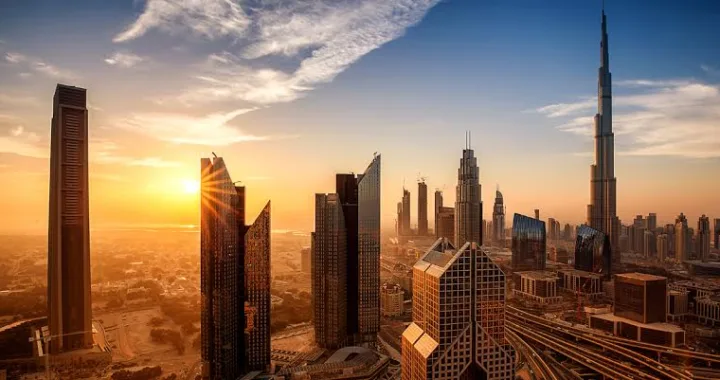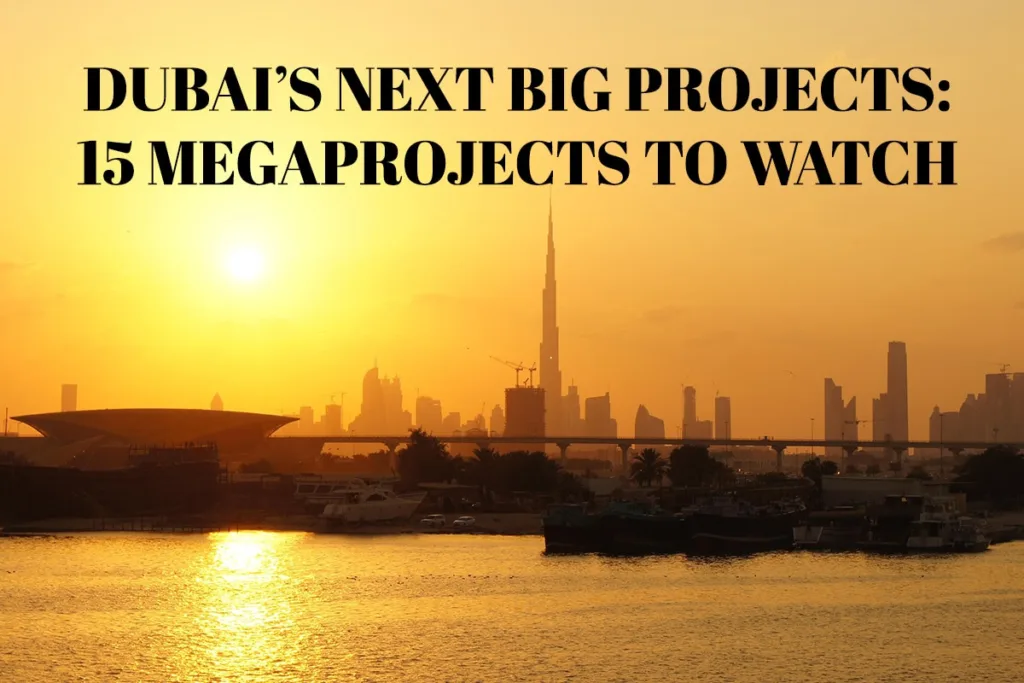
Dubai is entering another major phase of development.
The next few years will bring much more than new apartment towers. Dubai is expanding its airport capacity, adding new Metro lines, building underground transport systems, developing new waterfront districts, and adding some of the world’s tallest residential towers.
Arabian Business highlighted 15 major projects that show where the city is heading. Some are already under construction, while others have delivery dates extending into the early 2030s.
For property buyers and investors, the list is particularly useful. These projects can change accessibility, employment patterns, tourism flows, rental demand and property values across several parts of Dubai.
The important point is that Dubai’s next property growth areas may not be limited to its traditional prime districts.
The 15 projects at a glance
| Project | Location | Key scale | Expected timeline |
|---|---|---|---|
| Al Maktoum International Airport | Dubai South | 260M+ passengers planned | Major expansion underway |
| Dubai Metro Blue Line | Dubai Creek Harbour, International City, Silicon Oasis, Academic City | 30 km, 14 stations | 2029 |
| Dubai Metro Gold Line | Multiple Dubai districts | 42 km, 18 stations | 2032 |
| Dubai Loop | DIFC–Downtown Dubai | 22.2 km planned network | Phased |
| Palm Jebel Ali | Jebel Ali | 7 islands, 16 fronds | Villas from 2026–27 |
| Al Habtoor Tower | Al Habtoor City | 86 floors, 1,740 residences | From 2026 |
| Burj Azizi | Sheikh Zayed Road | 725 m, 131 floors | 2030 |
| Burj Binghatti Jacob & Co | Business Bay | ~557 m, 105 floors | Under development |
| Tiger Sky Tower | Business Bay | 532 m, 122 floors | Under development |
| Six Senses Residences Dubai Marina | Dubai Marina | 251 residences | 2029 |
| Franck Muller Aeternitas Tower | Dubai Marina | 450 m | 2027 |
| Binghatti Skyblade | Downtown Dubai | 619 units, 55 residential floors | Q4 2027 |
| Trump International Hotel and Tower Dubai | Sheikh Zayed Road | ~350 m, 80 floors | Under construction |
| Rixos Financial Centre Road Dubai Residences | Downtown Dubai | ~329 m, 84 levels | Under development |
| Mercedes-Benz Places by Binghatti | Downtown Dubai | Branded residences | Under development |
1. Al Maktoum International Airport: Dubai South’s biggest catalyst
Al Maktoum International Airport is arguably the most important project on this list from a long-term property perspective.
The planned airport capacity is expected to exceed 260 million passengers annually, alongside cargo capacity of around 12 million tonnes per year.
The wider plan includes:
- Five parallel runways
- Two terminals
- Seven concourses
- More than 430 aircraft stands
- New baggage infrastructure
- Automated People Mover systems
- Major power and cooling infrastructure
Construction activity was already progressing in 2026.
The property impact could be significant because the airport sits within the broader Dubai South growth corridor.
As aviation activity expands, Dubai South has the potential to develop into a much larger employment, logistics, commercial and residential centre.
That creates a long-term investment case for nearby housing, but investors should also account for the large amount of future residential supply planned across the area.
Investor takeaway: Dubai South deserves attention because airport infrastructure can support demand for homes, offices, hotels and logistics property over a long development cycle.
2. Dubai Metro Blue Line: connecting Dubai’s next growth districts
The Dubai Metro Blue Line is one of the most important transport projects for residential investors.
The approximately 30-km route will have 14 stations, combining underground and elevated sections.
It will connect areas including:
- Dubai Creek Harbour
- International City
- Dubai Silicon Oasis
- Academic City
Main tunnelling began in May 2026, with the project targeting around 30% completion by the end of 2026.
The projected ridership is around 200,000 passengers per day by 2030, potentially increasing to 320,000 by 2040.
This matters because public transport can change the relative attractiveness of residential locations.
A district that currently depends heavily on private cars can become more competitive when a Metro station provides direct access to major employment and leisure areas.
For investors, properties within reasonable walking or short-driving distance of future stations deserve closer attention.
However, buying purely because a Metro station is planned is risky. Investors should also examine current prices, rental demand, service charges and competing supply.
3. Dubai Metro Gold Line: a longer-term transport shift
The proposed Dubai Metro Gold Line takes the city’s transport expansion further.
The planned line will cover approximately 42 km, with 18 fully underground stations.
The project has an estimated investment of around AED 34 billion and is scheduled for inauguration on 9 September 2032.
It is expected to connect with existing Red and Green Metro infrastructure as well as Etihad Rail.
The Gold Line therefore represents a much longer-term investment consideration.
For property buyers, the main lesson is simple: transport infrastructure can gradually change where people choose to live and work.
But the 2032 timeline also means investors should avoid paying a large premium today based only on an infrastructure announcement.
4. Dubai Loop: an alternative way to move around central Dubai
The Dubai Loop is another interesting addition to Dubai’s transport plans.
The project involves an underground passenger network developed through cooperation between the RTA and The Boring Company.
The first phase covers approximately 6.4 km and four stations, linking DIFC with Dubai Mall.
The planned full network would extend to around 22.2 km with 19 stations.
The concept is particularly relevant to central Dubai because it could provide another way to move between high-density business, retail and residential areas.
If the system expands successfully, locations around DIFC, Downtown Dubai and surrounding business districts could benefit from improved connectivity.
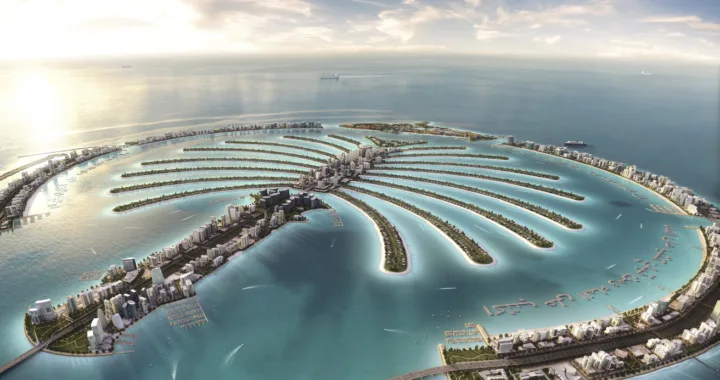
5. Palm Jebel Ali: a new waterfront investment corridor
Palm Jebel Ali is one of Dubai’s largest waterfront developments.
The master development spans seven islands and 16 fronds, with around 120 km of coastline planned across the wider project.
Residential construction is already active, with the first villas expected to be delivered in phases from late 2026 into 2027.
More than $3.5 billion in construction contracts have reportedly been awarded.
The development is expected to bring a large number of villas, hospitality assets, retail destinations and leisure facilities to Dubai’s western coastline.
For luxury property investors, Palm Jebel Ali is important because it increases the supply of high-end waterfront homes.
That creates both an opportunity and a risk.
The opportunity is access to a major new coastal destination while the masterplan is still developing.
The risk is that investors must wait for supporting infrastructure, hospitality and retail activity to mature.
6. Al Habtoor Tower: another major addition to Dubai’s residential skyline
Al Habtoor Tower is located within Al Habtoor City on Sheikh Zayed Road.
The tower has reached structural completion at 86 floors and contains approximately 1,740 residences.
More than 1,300 apartments are targeted for phased delivery from summer 2026.
Its scale makes it particularly significant for Dubai’s residential market.
Large projects like this can add substantial inventory to a single location. That means investors need to look beyond the headline height and assess the project’s unit mix, service charges, rental competition and surrounding supply.
7. Burj Azizi: a new supertall landmark
Burj Azizi is planned to rise approximately 725 metres across 131 floors on Sheikh Zayed Road.
The mixed-use tower is expected to include:
- Residential units
- Hospitality
- Retail
- Observation facilities
If completed as planned, it would become one of Dubai’s tallest structures, ranking below Burj Khalifa.
The project also reinforces Dubai’s continued demand for ultra-prime vertical development.
For investors, however, height alone does not determine property performance. Location, views, branded services, entry price and scarcity of comparable inventory are more important factors.
8. Burj Binghatti Jacob & Co Residences
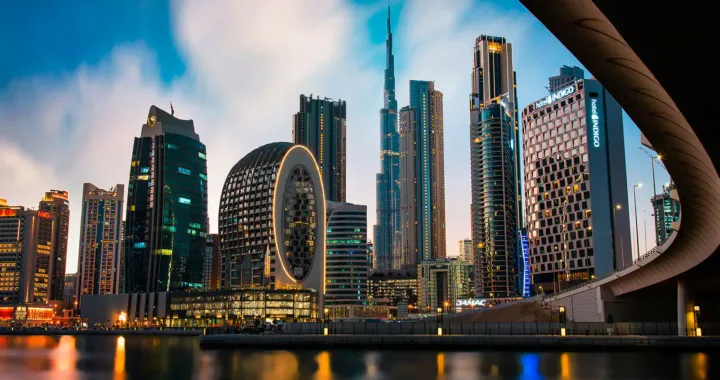
Business Bay is becoming increasingly associated with supertall branded residences.
Burj Binghatti Jacob & Co is planned at approximately 557 metres and 105 storeys.
The project includes high-end residences, villas, mansions and penthouses.
Its combination of height, luxury branding and Business Bay location places it firmly in Dubai’s ultra-prime residential segment.
The key investment consideration is pricing.
Ultra-luxury properties can benefit from limited comparable stock, but the initial purchase price can already reflect a substantial premium. Investors should therefore focus on the relationship between purchase price, rental potential and future resale demand.
9. Tiger Sky Tower: another supertall in Business Bay
Tiger Sky Tower is planned at approximately 532 metres and 122 floors.
The residential development includes distinctive high-level amenities, including an infinity pool at around 431 metres and a restaurant at approximately 439 metres.
Its location in Business Bay places it close to Downtown Dubai and several established commercial districts.
Business Bay’s advantage is that it combines residential demand with proximity to offices, hospitality and Downtown attractions.
That gives projects in the area a broader tenant pool than developments that depend solely on luxury tourism demand.
10. Six Senses Residences Dubai Marina
Six Senses Residences Dubai Marina brings the branded-residence model into one of Dubai’s most established waterfront districts.
The project includes 251 residences, ranging from two- to four-bedroom homes to larger penthouses and Sky Mansions.
Completion is targeted for 2029, with construction reported at around 29% in 2026.
The project is positioned around wellness, hospitality and branded residential services.
For buyers, the main appeal is the combination of a recognised international hospitality brand and Dubai Marina’s established rental and tourism market.
At the same time, investors should compare the project’s premium against existing luxury residences in Dubai Marina.
11. Franck Muller Aeternitas Tower
The Franck Muller Aeternitas Tower is planned as a 450-metre branded clock tower in Dubai Marina.
The project is being developed by London Gate with Franck Muller.
Construction had progressed significantly by 2026, with the substructure completed and more than 70% of the superstructure reportedly finished.
The project reportedly sold out within three months, with handover targeted for late 2027.
This is a useful example of how Dubai’s branded-residence market is moving beyond traditional hotel brands into luxury fashion, watchmaking and lifestyle names.
12. Binghatti Skyblade
Binghatti Skyblade is located near Burj Khalifa Boulevard in Downtown Dubai.
The project includes approximately 619 residential units and two retail units, spread across 55 residential floors.
The unit mix ranges from studios to three-bedroom apartments, with completion targeted for Q4 2027.
Downtown remains one of Dubai’s strongest locations for short-term rentals, tourism and premium residential demand.
However, competition is also intense.
Investors should therefore compare Skyblade with other new Downtown launches rather than assuming every new project will achieve the same rental performance.
13. Trump International Hotel and Tower Dubai
The Trump International Hotel and Tower Dubai is planned at approximately 350 metres and 80 floors on Sheikh Zayed Road.
The mixed-use development includes a hotel, branded residences and a private members’ club.
By August 2026, podium construction was underway, with enabling works targeted for completion in September.
The project adds another globally recognised brand to Dubai’s luxury residential market.
Its investment case will depend heavily on the final product, pricing, brand premium and operating structure.
14. Rixos Financial Centre Road Dubai Residences
The Rixos Financial Centre Road Dubai Residences is planned as an approximately 329-metre, 84-level branded residential tower in Downtown Dubai.
The project includes around 260 residences, ranging from one- to four-bedroom homes to penthouses.
Amenities are designed around an active lifestyle, with facilities such as:
- Fitness areas
- Padel courts
- Running tracks
- Screening rooms
- Multi-level communal spaces
The relatively limited number of residences gives the project a different proposition from larger residential towers.
For investors, the smaller inventory can support a stronger sense of scarcity, although pricing remains the key variable.
15. Mercedes-Benz Places by Binghatti
Mercedes-Benz Places brings another major global brand into Dubai’s branded-residence sector.
The Downtown Dubai development uses Mercedes-Benz design principles and incorporates photovoltaic façade panels.
The residential offering includes two- to four-bedroom apartments and larger penthouses.
Prices have been reported from approximately AED 10.3 million.
The project shows how Dubai’s luxury property market is increasingly using global brands to differentiate new developments.
For buyers, the brand can add value, but the premium needs to be justified by location, specifications, services and long-term resale demand.
What these 15 projects tell us about Dubai’s property market
Taken together, these developments show three major shifts in Dubai’s growth pattern.
First, Dubai is expanding geographically.
Dubai South, Jebel Ali, Dubai Creek Harbour and other emerging districts are receiving major infrastructure investment.
That means investors should not focus only on Downtown, Marina and Palm Jumeirah.
Second, transport infrastructure is becoming a property investment factor.
The Blue Line, Gold Line and Dubai Loop could improve connectivity across several districts.
For residential investors, proximity to future transport infrastructure can support long-term demand. But the expected benefit should be compared with today’s property valuation.
Third, Dubai’s luxury market is becoming increasingly brand-driven.
Six Senses, Franck Muller, Trump, Mercedes-Benz, Jacob & Co and Rixos are all represented in the pipeline.
This gives buyers more choice in branded residences, but it also means investors need to distinguish between genuine scarcity and simple branding.
Biggest impact of investment?
The projects point to several areas worth monitoring closely.
Dubai South – Al Maktoum International Airport is the main catalyst. The area could benefit from rising employment, logistics activity, aviation demand and supporting infrastructure.
The biggest concern is future supply. Investors should choose projects with strong access, credible developers and realistic delivery schedules.
Dubai Creek Harbour – The Blue Line could significantly improve connectivity for this waterfront district.
Its combination of waterfront housing and future Metro access could support both end-user and investment demand.
Jebel Ali and Palm Jebel Ali – The expansion of Palm Jebel Ali could create a major new luxury coastal market.
Investors should focus on infrastructure delivery, access roads, hospitality development and the pace at which supporting amenities arrive.
Business Bay – Business Bay continues to attract major branded and supertall developments.
Its proximity to Downtown, DIFC and Sheikh Zayed Road supports both residential and rental demand.
The main issue is competition. There is already a large pipeline of new apartments.
Dubai Marina – Marina remains a mature waterfront market, but new branded developments such as Six Senses and Franck Muller add another layer of ultra-luxury inventory.
The established location provides an advantage, but buyers are paying for an already developed market rather than entering an early-stage district.
Downtown Dubai – Downtown continues to attract some of Dubai’s most expensive new residential developments.
The advantage is established tourism, retail, hospitality and infrastructure.
The downside is that purchase prices are already high, so future capital growth may depend heavily on scarcity and product quality.
What is in it for investors?
The 15 megaprojects should not be treated as a list of properties to buy.
They are better viewed as indicators of where Dubai is investing capital and where future economic activity may develop.
Before buying, assess five things:
1. Infrastructure timing – A planned airport or Metro station has limited immediate value if completion is many years away.
2. Current property pricing – Compare the project’s price per square foot with completed properties and competing launches nearby.
3. Future supply – A major masterplan can bring infrastructure and thousands of new homes at the same time. That can support demand but also increase rental competition.
4. Rental fundamentals – Look at current rents, occupancy, tenant profiles and realistic gross yields rather than relying only on developer projections.
5. Exit demand – A property needs future buyers as well as tenants. Branded residences and supertall apartments should be assessed for their likely resale audience.
Dubai’s next property cycle will be shaped by infrastructure
The biggest message from these 15 projects is that Dubai’s future development is becoming increasingly interconnected.
Airports create employment. Metro lines improve accessibility. Waterfront projects create new residential destinations. Major towers add premium housing.
Together, these projects can reshape the city’s property map through the late 2020s and into the 2030s.
For investors, that creates opportunities across several price segments. But the strongest opportunities will not necessarily be the tallest tower or the newest launch.
The better investment may be a property where infrastructure is arriving, population and employment are growing, supply remains manageable, and today’s price has not fully reflected the area’s future potential.
That is the lens investors should use when assessing Dubai’s next major property growth areas.