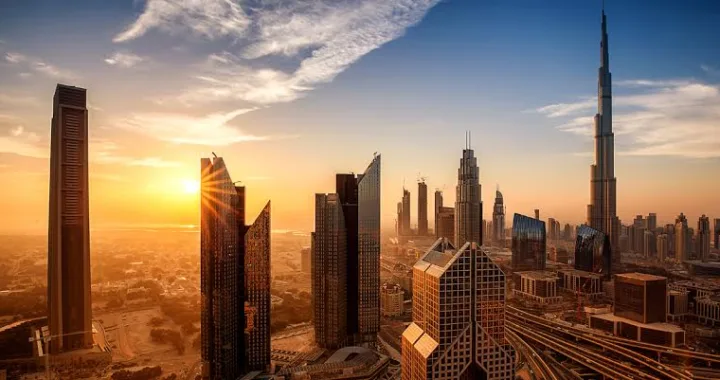
Dubai’s waterfront market is not one single property segment.
A marina apartment, a Palm villa, and a Creek Harbour residence all offer a different type of waterfront living. Their prices, rental yields, buyer profiles, and resale demand can vary sharply.
This matters when you compare waterfront property in Dubai. A home with a water view does not always have beach access. A premium island address does not always produce the highest rental return.
As of September 2026, the main waterfront locations include Dubai Marina, Palm Jumeirah, Emaar Beachfront, Dubai Creek Harbour, Bluewaters Island, La Mer, and Jumeirah Bay Island. Each serves a different part of the market.
Dubai waterfront property at a glance
| Community | Waterfront type | Indicative price/sq ft | Typical 1–2BR entry | Gross rental yield | Main appeal |
| Dubai Marina | Marina | AED 1,750–2,800 | AED 1.1M–3.5M | 5.5–7.5% | Rental income and liquidity |
| Palm Jumeirah | Beachfront island | AED 2,500–5,500+ apartments | AED 2.5M–7M+ | 4–6% apartments | Luxury and beach living |
| Emaar Beachfront / Dubai Harbour | Private beach | AED 2,000–4,500+ | AED 2M–6M+ | 5–7% | Beach lifestyle and newer stock |
| Dubai Creek Harbour | Creek waterfront | AED 1,800–2,800 | AED 1.3M–3M+ | 5–7% | New development and growth |
| Bluewaters Island | Island waterfront | AED 3,000–5,000+ | AED 3M–6M+ for 2BR | 4–5% | Scarcity and lifestyle |
| La Mer | Beachfront | AED 1,500–4,000+ | Varies by property | 5–6% | Low-density coastal living |
| Jumeirah Bay Island | Private island | AED 7,000–12,000+ for land/plots | Ultra-high | 3–5% | Trophy properties |
These figures are indicative rather than fixed market rates. Actual prices depend on building, floor, view, size, condition, service charges, payment plan, and whether the property is ready or off-plan.
Dubai Marina: the income-focused waterfront market
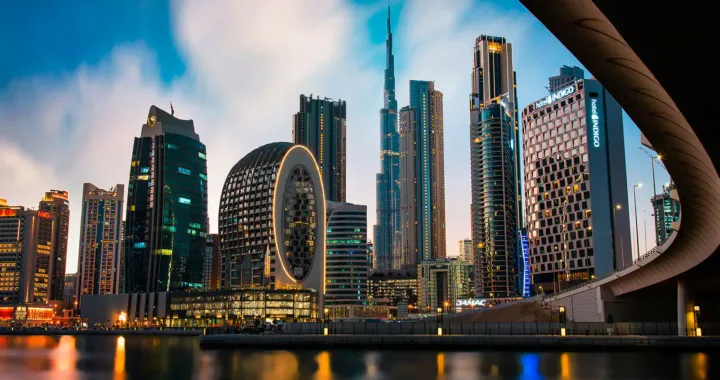
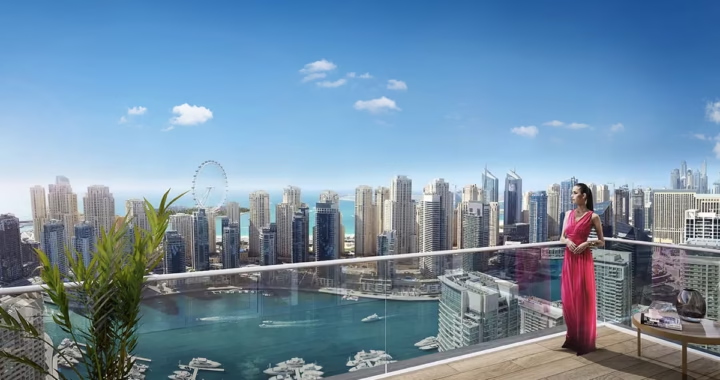
Dubai Marina is one of the most established waterfront districts in Dubai.
The area is built around a large artificial canal and has a dense mix of residential towers, restaurants, hotels, shops, and leisure facilities. The Dubai Metro and tram network also make the area practical for tenants without cars.
That combination supports a broad rental market.
Investors can target professionals, couples, families, and short-term visitors. Apartments close to the Marina Walk, metro, tram, and JBR generally have strong tenant appeal.
Indicative prices range from about AED 1,750 to AED 2,800 per sq ft. Smaller one-bedroom apartments can start around AED 1.1 million, while premium two-bedroom homes can cost several million dirhams.
The key distinction is that Marina offers waterfront living without being a beachfront community.
Residents have marina views and access to JBR Beach, but most buildings do not provide private beach access.
For an investor, the attraction is the combination of established demand, rental depth, and a large resale market.
Palm Jumeirah: Dubai’s established luxury waterfront address
Palm Jumeirah operates at a different price level.
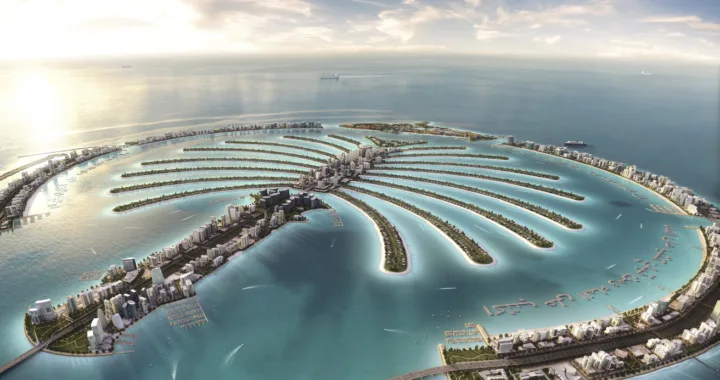
The island has apartments along the trunk and crescent, while the fronds contain some of Dubai’s most expensive villas and branded residences.
Private beach access is a major differentiator.
Apartment prices can range from roughly AED 2,500 to AED 5,500 or more per sq ft. Premium villas can command much higher rates.
Rental yields are usually lower than in Marina because purchase prices are high. Apartments can generate around 4–6% gross yields, while luxury villas often produce lower percentage returns.
That does not mean rental demand is weak.
Palm Jumeirah attracts luxury tenants, holidaymakers, executives, and international buyers. Its limited land supply also supports its position as a mature luxury market.
The investment case here is therefore less about maximising yield and more about combining rental demand with a globally recognised address.
Emaar Beachfront and Dubai Harbour: modern beach living
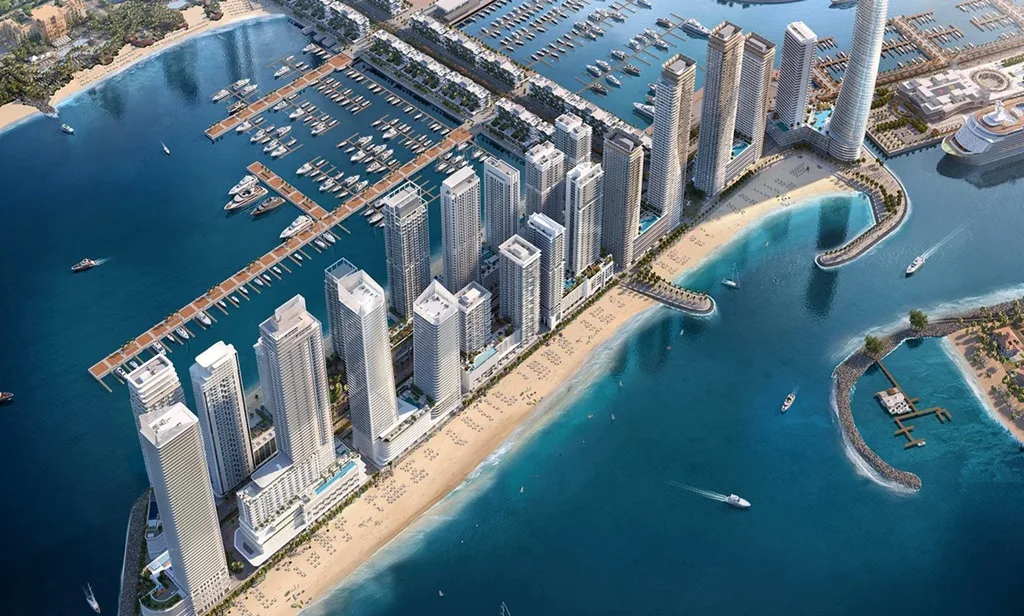
Emaar Beachfront has changed the waterfront proposition in Dubai.
The masterplan sits within Dubai Harbour and combines high-rise residential towers with private beach access, marina facilities, and views towards the Palm and Arabian Gulf.
This is important because buyers get something that Marina does not offer in the same way: a private beach within a newer residential masterplan.
Prices vary considerably between towers and views. Prime apartments can exceed AED 4,500 per sq ft.
Typical entry prices for one- and two-bedroom properties can start around AED 2 million, with premium residences reaching much higher levels.
Rental yields of around 5–7% are possible on selected properties, although actual returns depend heavily on purchase price and achieved rent.
The wider Dubai Harbour area also includes luxury developments from several developers. Projects such as Address Residences, DAMAC Bay by Cavalli, and W Residences add to the area’s high-end residential offering.
For buyers comparing Marina with Emaar Beachfront, the choice often comes down to urban convenience versus private beach access and newer stock.
Dubai Creek Harbour: waterfront exposure with a different growth profile
Dubai Creek Harbour is different from the traditional coastal communities.
It sits along Dubai Creek rather than directly on the open Arabian Gulf. The masterplan includes residential towers, a marina, retail, public spaces, and waterfront promenades.
Creek Beach adds a separate beach-oriented residential component within the wider development.
Indicative apartment prices are around AED 1,800–2,800 per sq ft, although individual projects can fall outside this range.
One- and two-bedroom apartments can start around AED 1.3 million, depending on the project and launch stage.
The area remains under development, which creates both opportunity and uncertainty.
Buyers are paying for today’s property while also considering future infrastructure, retail, transport, and public-realm improvements.
Planned infrastructure has become an important part of the area’s investment story. Future transport links and major commercial development are expected to improve connectivity and activity as the masterplan progresses.
For this reason, Creek Harbour is often considered by buyers looking for waterfront exposure at a lower entry point than Palm Jumeirah or Bluewaters.
But buyers should check the exact location carefully. Creek views, marina access, lagoon frontage, and beach access are not interchangeable.
Bluewaters Island: limited supply at a premium
Bluewaters Island has a much smaller residential market.
The island sits opposite JBR and combines residences with hotels, restaurants, retail, and Ain Dubai.
Its limited residential supply is one of its defining characteristics.
Prices commonly sit above many established Dubai communities. Two-bedroom apartments can start around AED 3 million and move considerably higher for premium residences.
Gross yields are generally around 4–5%.
That is partly a function of the capital required to buy into the community.
Bluewaters is more relevant to buyers who value location, limited supply, views, and a high-end island setting. It is less suited to an investor whose only objective is maximising rental yield.
Its proximity to JBR also gives residents easy access to one of Dubai’s best-known public beaches.
La Mer: beachfront living with a lower-density feel
La Mer offers another version of coastal Dubai.
The district includes residential communities such as Port de La Mer and Sur La Mer. It has a mix of apartments, townhouses, and villas, along with beach access, restaurants, and leisure facilities.
Compared with Marina, the environment is less dominated by tall residential towers.
This makes it relevant to families and buyers who want a coastal location without the density of a major high-rise district.
Pricing varies significantly across individual developments. Premium townhouses and villas can command substantially more than apartments.
The investment case depends heavily on the specific project. Buyers should assess service charges, rental evidence, building quality, beach access, and resale activity rather than treating the whole La Mer area as one market.
Jumeirah Bay Island: a trophy-property market
Jumeirah Bay Island sits at the top end of Dubai’s waterfront market.
The private island has a small number of residential properties and development plots. Villas can command exceptionally high prices.
Land values can exceed AED 7,000–12,000 per sq ft, depending on the plot and transaction.
This is not a conventional rental investment market.
The buyer pool is much smaller. The properties are typically aimed at ultra-high-net-worth individuals seeking privacy, large homes, and a rare Dubai address.
Rental yields can be relatively low when measured against the purchase price.
Scarcity is the central market characteristic.
Waterfront does not always mean beachfront
This is one of the most important points when comparing Dubai waterfront properties.
There are at least four different forms of waterfront exposure:
- Open-sea beachfront: Palm Jumeirah and Emaar Beachfront
- Marina waterfront: Dubai Marina and Dubai Harbour
- Creek waterfront: Dubai Creek Harbour
- Island waterfront: Bluewaters and Jumeirah Bay Island
The difference affects both lifestyle and property value.
A marina-view apartment can offer excellent views without giving residents direct access to a beach. A Creek Harbour apartment may have waterfront frontage but no private open-sea beach.
Always verify the exact access offered by the building or master community before buying.
How rental yields differ
Waterfront property usually carries a price premium.
That premium can reduce the rental yield percentage.
Dubai Marina generally offers stronger gross yields because it combines established rental demand with a broad range of apartment prices.
Palm Jumeirah and Jumeirah Bay Island sit at much higher capital values. Their percentage yields can therefore be lower.
Emaar Beachfront occupies a middle position. It combines premium pricing with relatively strong rental demand and newer buildings.
Creek Harbour can also produce competitive yields, particularly where an investor buys during an attractive off-plan launch or finds a property with a strong rent-to-price ratio.
Gross yield, however, is only the starting point.
Investors should also calculate:
Net yield = annual rent − operating costs − service charges − management costs − vacancy
This gives a more realistic view of the investment.
Liquidity matters as much as yield
A property can show a high theoretical rental yield and still be difficult to sell.
Established areas such as Dubai Marina have a large resale market. There are many comparable transactions, active agents, and a wide tenant pool.
Ultra-luxury locations operate differently.
Jumeirah Bay Island may have exceptional property values, but the number of potential buyers is much smaller. A seller may need more time to find the right buyer.
This creates an important distinction between rental performance and resale liquidity.
Investors should consider both before buying.
Dubai waterfront supply in 2026
Dubai entered 2026 after several years of strong residential sales and extensive off-plan activity.
Around 55,600 residential units are expected to be delivered during 2026, according to market estimates cited across industry reports. More than 60,000 additional units are scheduled for 2027.
That supply matters for waterfront investors.
Not all new units compete directly with existing waterfront stock. Location, views, beach access, building quality, and developer reputation create different market segments.
Still, investors should not assume that every waterfront property will appreciate at the same rate.
The strongest properties are likely to remain those with a clear reason for tenants and buyers to pay a premium.
Which Dubai waterfront community fits your objective?
There is no single waterfront market that suits every buyer.
For rental income and established liquidity, Dubai Marina offers a broad tenant and resale base.
For private beach access and luxury living, Palm Jumeirah and Emaar Beachfront provide a stronger beachfront proposition.
For newer waterfront stock and a longer development story, Dubai Creek Harbour offers a different entry point.
For limited supply and island living, Bluewaters Island stands apart.
For lower-density coastal living, La Mer offers a different residential format.
For trophy ownership, Jumeirah Bay Island sits in a separate ultra-luxury segment.
The right comparison should therefore start with the buyer’s objective rather than the word “waterfront”.
Final view
Dubai’s waterfront market is best understood as several sub-markets rather than one category.
Marina focuses on established urban rental demand. Palm Jumeirah focuses on luxury beachfront ownership. Emaar Beachfront combines newer apartments with private beaches. Creek Harbour offers a large-scale waterfront masterplan with a different development profile. Bluewaters relies on limited supply and premium positioning. La Mer provides a lower-density coastal option. Jumeirah Bay Island serves the trophy-property segment.
The price gap between these locations can be substantial.
So can the difference in rental yield and resale liquidity.
For investors, the key question is not simply “Which waterfront property is best?” It is “What am I buying the waterfront exposure for?”
That answer determines whether price, rental income, beach access, scarcity, future development, or resale liquidity should receive the most attention.