Dubai’s next phase of real estate growth will not come only from existing communities. Some of the most significant changes may come from large parcels of undeveloped land that sit beside established districts, major highways, airports and new infrastructure.
Several large land holdings across Dubai are attracting attention because of their location and the scale of development that could eventually take place there. Some already have announced plans. Others remain less defined, so their future use should be treated as a development possibility rather than a confirmed project.
Here are four large land areas worth watching.
4. The Land Between Emirates Hills and Al Barsha
One of the notable undeveloped areas sits around the corridor between Emirates Hills, Al Barsha and Al Khail Road.
The location is important because it is surrounded by established high-value residential districts. Dubai Hills Estate is also nearby, with direct access to Al Khail Road and a large mix of residential, retail and leisure uses. Emaar describes Dubai Hills Estate as a 2,700-acre master-planned development with an 18-hole golf course, extensive parks and Dubai Hills Mall.
There has been market discussion about large privately held parcels in this wider area, including land associated with Al Rostamani Group, but I could not verify from reliable public sources that the specific parcel is owned by “ARM Holdings” or that a particular future master community has been formally announced.
That distinction is important.
For now, the stronger fact is the location itself. The area sits within an established central Dubai residential corridor, with access to Al Khail Road and proximity to Emirates Hills, Dubai Hills Estate and Al Barsha South.
If a large-scale master development is eventually announced on a major parcel here, its impact could extend beyond the site itself. New homes, retail, schools, hospitality and road connections could add another layer to an already developed part of Dubai.
Status: Future development potential; specific ownership and master plan require official confirmation.
3. The Large Land Corridor Behind Dubai Hills
Another area worth watching is the broad land corridor around the eastern and southern sides of Dubai Hills Estate, extending toward Sheikh Mohammed Bin Zayed Road (E311).
Dubai Hills itself has already shown what large-scale land development can do to a previously less-developed part of Dubai. The community covers more than 11 million square metres and includes residential districts, parks, a golf course, schools and Dubai Hills Mall.
Its location beside Al Khail Road has also made connectivity a major part of its development story. RTA built a network of bridges and roads connecting Dubai Hills Mall with Al Khail Road and surrounding districts.
The wider land corridor could therefore be important for the next stage of growth in this part of Dubai.
Dubai Holding has confirmed that it has a strategic land portfolio across the emirate and is using large land parcels for future master-planned communities. In February 2026, Dubai Holding and Aldar announced a partnership involving two strategic land plots that are expected to deliver almost 14,000 homes with a combined gross development value above AED 38 billion. One of those plots covers approximately 4 million square metres along Dubai’s eastern growth corridor opposite Nad Al Sheba. (Dubai Holding)
That announcement shows the scale at which Dubai’s major land banks can eventually be developed.
However, the specific claim that the entire parcel behind Dubai Hills between Al Khail Road and E311 is divided between Dubai Holding and Emaar has not been sufficiently confirmed by public official sources. It is therefore better to view this as a land corridor to watch, rather than call it a confirmed upcoming community.
Status: Large-scale development potential, with some surrounding land already entering formal development partnerships.
2. The Land Beside Palm Jebel Ali and JAFZA
Further south, the land around Palm Jebel Ali, JAFZA and the wider Jebel Ali corridor has a different development story.
This area combines several major economic and infrastructure drivers.
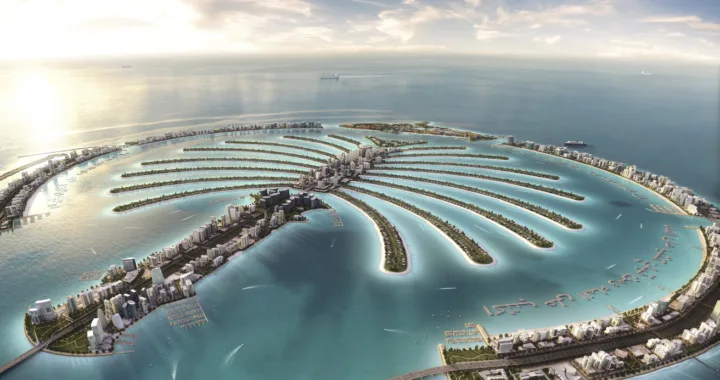
Palm Jebel Ali is being developed by Nakheel, part of Dubai Holding Real Estate. Dubai Holding says the project is planned as a large waterfront community with villas, walkable streets, public spaces and direct access to the shoreline. (Dubai Holding)
The project is already moving beyond the planning stage. Nakheel awarded more than AED 750 million in infrastructure contracts for Palm Jebel Ali, with the works scheduled for completion in Q4 2026. (Dubai Holding)
There is also evidence of Dubai Holding actively bringing additional development partners into the area. In 2025, Dubai Holding announced an agreement with Select Group for residential and hospitality development at Palm Jebel Ali. (Media Office)
In February 2026, Dubai Holding and Aldar also announced a planned luxury waterfront development on Palm Jebel Ali, covering almost 250,000 square metres of gross floor area. The homes are scheduled to launch in 2027. (Dubai Holding)
This means the wider Jebel Ali corridor is not dependent on a single project.
Palm Jebel Ali is one component. JAFZA provides an established industrial and logistics base. Dubai South is expanding further inland. Al Maktoum International Airport is also becoming a major long-term infrastructure driver.
Together, these projects can increase demand for housing, retail, hospitality and commercial space across the wider southern part of Dubai.
Status: Multiple confirmed projects and infrastructure investments are already underway.
1. The Land Around Al Maktoum International Airport
The largest development story among these four is the area around Al Maktoum International Airport and Dubai South.
Here, the future is already being defined by major announced projects.
In May 2026, Dubai South and Majid Al Futtaim announced an agreement for an AED 62 billion mixed-use master community within Dubai South.
The development will cover approximately 22 million square feet and will include residential, retail and lifestyle components. A large shopping mall will serve as one of its main anchors.
Majid Al Futtaim has since confirmed that its development pipeline exceeds AED 100 billion and specifically referenced the AED 62 billion Dubai South agreement in its 2026 results.
The significance of this location extends beyond the project itself.
Dubai South is being developed around aviation, logistics, commercial activity and residential communities. Al Maktoum International Airport is expected to play a major role in the area’s long-term growth.
This gives the surrounding land several potential demand drivers:
- Residential communities
- Retail destinations
- Hospitality
- Logistics
- Commercial districts
- Aviation-related businesses
- New transport infrastructure
- Large-scale employment growth
The Majid Al Futtaim project also shows how major developers are beginning to commit substantial capital to Dubai South.
For land watchers, this is important because large master developments can create secondary growth around them. New roads, retail destinations, housing and employment centres can change the development profile of neighbouring parcels over time.
Status: Confirmed AED 62 billion master community within Dubai South.
Why These Four Areas?
The four locations are different, but they share one feature: scale combined with strategic location.
The first two sit within established central Dubai corridors. Their future development could add new residential and commercial districts between existing communities.
The Palm Jebel Ali and Jebel Ali area is different. It represents the expansion of Dubai’s western and southwestern waterfront and logistics corridor.
Dubai South is further south and has a stronger connection to aviation, logistics and long-term urban expansion.
The common factor is infrastructure.
Large land parcels become significantly more valuable when major roads, airports, retail destinations and established communities surround them.
A Simple Way to Look at Dubai’s Future Land Growth
| Area | Main growth driver | Current position |
|---|---|---|
| Emirates Hills–Al Barsha corridor | Central location and surrounding premium communities | Future potential |
| Dubai Hills–E311 corridor | Dubai Hills expansion and eastern growth | Mixed confirmed and potential development |
| Palm Jebel Ali–JAFZA | Waterfront, logistics and Palm Jebel Ali | Multiple projects underway |
| Al Maktoum Airport–Dubai South | Airport, logistics and large mixed-use communities | Major projects confirmed |
The Important Point for Investors
Undeveloped land can attract attention long before a master plan becomes public. But ownership, planning approvals, development rights and proposed land use can change.
That is why these areas should not all be treated as confirmed future communities.
The AED 62 billion Dubai South–Majid Al Futtaim project is confirmed. Palm Jebel Ali also has several confirmed development and infrastructure commitments.
The larger parcels around Emirates Hills, Al Barsha and the Dubai Hills–E311 corridor require more caution until official master plans, ownership details and development announcements are released.
For Dubai’s property market, however, these large land banks remain worth watching. Their eventual development could influence where new housing, retail, employment and infrastructure appear across the emirate over the next decade.