Dubai Creek Harbour is entering a major phase of growth.
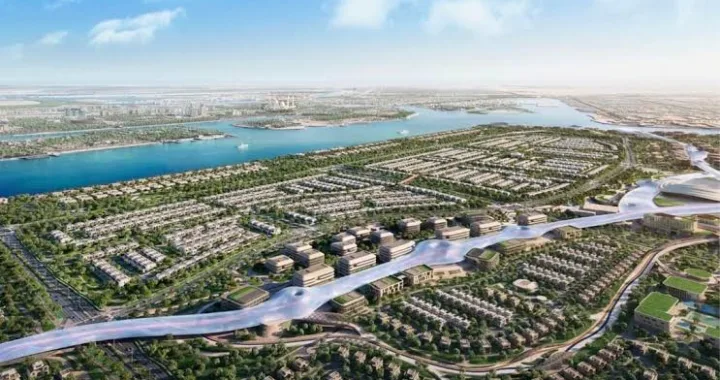
The waterfront community is already known for modern apartments, Creek views, parks, and access to central Dubai. Emaar is now expanding the wider master plan with more homes, retail areas, hotels, public spaces, and transport infrastructure.
The scale is significant.
Dubai Creek Harbour covers about 6 square kilometres. The long-term plan is designed to support around 200,000 residents when complete.
Location is another key advantage. The community sits near Ras Al Khor Wildlife Sanctuary. Dubai International Airport is about 10 minutes away, depending on traffic. Downtown Dubai and Business Bay are also within easy reach.
These numbers help explain why the expansion matters.
It is not simply about adding more residential towers. Emaar is building a larger mixed-use community where housing, retail, leisure, hospitality, and public spaces work together.
For homebuyers, that can mean more services close to home.
For investors, a larger resident base and better infrastructure may support rental demand. They could also help property values over the long term. However, returns will depend on purchase price, future supply, unit quality, and market conditions.
What Is Dubai Creek Harbour?
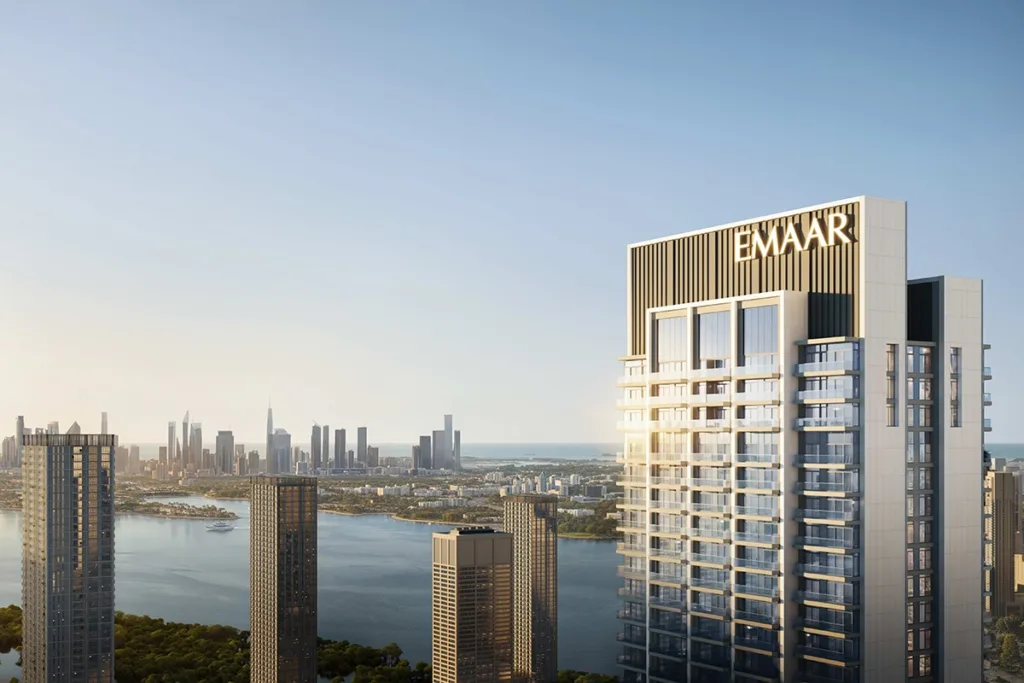
Dubai Creek Harbour is a master-planned waterfront development by Emaar.
It covers about 6 sq. km along Dubai Creek. This makes it one of Dubai’s larger master developments.
The community is planned for around 200,000 residents at full completion.
That is important because a population of this size needs far more than housing. It needs shops, restaurants, healthcare, schools, parks, transport links, and other daily services.
The master plan therefore includes residential, commercial, retail, hospitality, and leisure areas.
Residents can also benefit from the waterfront setting without living far from Dubai’s main employment centres.
This mix gives Dubai Creek Harbour a clear role in Dubai’s future housing market.
Why Is Emaar Expanding Dubai Creek Harbour?
Dubai continues to grow.
The city’s population has moved above 4 million residents. More residents create greater demand for homes, transport, shops, schools, and other services.
Dubai also continues to attract skilled workers, entrepreneurs, business owners, and international investors.
Emaar’s expansion responds to this wider growth.
The current development strategy has four clear areas of focus:
- More residential supply
- More retail and entertainment
- Better transport links
- A stronger live-work environment
The aim is to create a community that can support daily needs instead of functioning mainly as a residential address.
This matters to buyers.
A good apartment may attract interest at launch. But long-term demand often depends on what exists outside the building.
People need supermarkets. Families need schools and parks. Workers need practical transport links. Residents also value restaurants, cafés, fitness facilities, and outdoor spaces.
The expansion addresses many of these needs.
More Homes for a Growing Population
Residential development remains a major part of the plan.
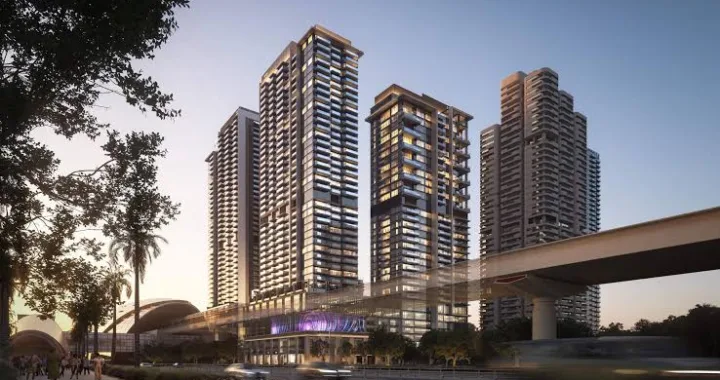
Emaar continues to add apartments and waterfront residences across Dubai Creek Harbour.
More supply gives buyers a wider choice of unit sizes, locations, views, and price points.
It also helps increase the community’s permanent population.
That population matters to the local economy.
A community planned for 200,000 people can create substantial demand for everyday services. Supermarkets, restaurants, clinics, schools, cafés, gyms, and other businesses all need a strong local customer base.
There is another benefit.
Dubai Creek Harbour is being planned around connected neighbourhoods rather than isolated towers.
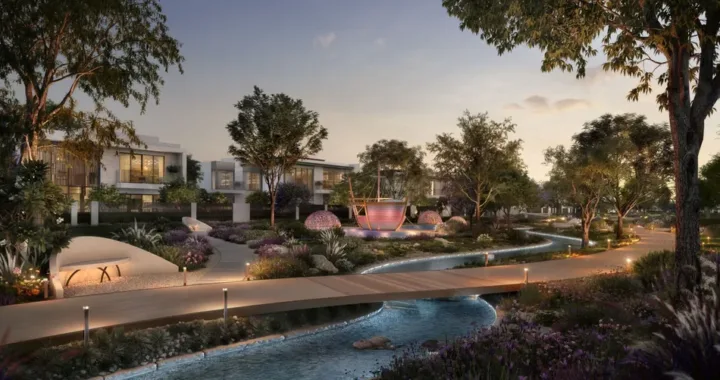
Homes are linked with parks, walking areas, public spaces, and waterfront promenades.
For buyers planning to live in the community, these details can matter as much as apartment finishes.
For investors, they may help support tenant retention and occupancy.
Dubai Square Could Become a Major Activity Centre
Dubai Square is one of the key parts of the wider plan.
It is planned as more than a conventional shopping centre.
The district will combine retail, restaurants, hospitality, entertainment, and public areas.
That could have a direct effect on residents.
People will have more options for shopping, eating, and leisure without needing to drive to another part of Dubai.
It could also support the rental market.
Large retail and hospitality districts create jobs. Employees working within or close to the community may prefer nearby housing.
Visitor traffic could provide another source of activity.
This does not mean every apartment will achieve high occupancy or strong rental growth. Building quality, rent, unit size, view, and competing supply will still matter.
But having a major retail and leisure district within the master plan adds another demand driver.
Better Transport Can Improve Daily Life
Location alone does not make a community convenient.
Travel time matters.
Dubai Creek Harbour has already benefited from road improvements. Future transport upgrades could make access even easier.
The community has a major advantage in its proximity to Dubai International Airport. Travel time is around 10 minutes, although actual times depend on traffic and the exact starting point.
Downtown Dubai and Business Bay are also nearby.
This matters for residents who commute to central business districts.
Saving even 15 minutes per trip could equal around 2.5 hours a week for someone making ten work-related journeys. That is an illustrative calculation, but it shows why travel time can affect housing decisions.
For tenants, a practical commute can sometimes matter more than having a larger apartment farther from work.
For owners, stronger transport links can widen the potential tenant pool.
More Parks and Outdoor Space
Dubai Creek Harbour’s waterfront setting is one of its main features.
Emaar plans to add more parks, landscaped areas, walking routes, cycling spaces, promenades, and outdoor recreation areas.
These facilities serve different groups.
Families may value safe places for children to walk and play.
Professionals may prefer waterfront cafés and walking areas after work.
Older residents may place greater value on quieter surroundings and accessible green spaces.
Outdoor areas also make higher-density communities easier to live in.
This becomes important as the number of residents increases.
The goal is not simply to fit more homes into the master plan. Public areas need to grow with the population.
Dubai’s Market Fundamentals Support the Expansion
The expansion is taking place against a strong demographic backdrop.
Dubai’s population has crossed 4 million.
Population growth is one of the clearest drivers of housing demand. New residents need somewhere to live. Some buy homes, while many rent during their first years in the city.
Dubai also receives tens of millions of international visitors each year.
Tourism supports hotels, serviced apartments, restaurants, shops, entertainment businesses, and employment.
Foreign investment is another factor.
Dubai attracts property buyers from Europe, Asia, Africa, and the wider Middle East.
Long-term residency options and the lack of an annual property tax are among the factors that can make Dubai attractive to international buyers.
The economy has also spread across several major industries.
Technology, finance, healthcare, logistics, tourism, and professional services all create jobs.
More jobs can lead to more housing demand.
Dubai Creek Harbour could benefit from these trends because it combines housing with access to established business districts.
What Does the Expansion Mean for Investors?
Investors should look at the whole community rather than only the apartment.
A new kitchen or attractive view can help a property stand out. But long-term demand also depends on transport, retail, public spaces, services, and future supply.
Dubai Creek Harbour has several factors worth assessing.
A Potential Resident Base of 200,000
The planned population is around 200,000 people.
At full development, this would create a sizeable local consumer base.
More residents can support shops, restaurants, schools, clinics, and other businesses.
As more services open, the community can become more practical for everyday living.
That may encourage residents to remain in the area for longer.
Rental Demand
Dubai Creek Harbour has access to major employment areas such as Downtown Dubai and Business Bay.
That gives it a broad potential tenant base.
Future jobs created by retail, hospitality, and commercial development inside the community could add another source of demand.
Investors should still calculate returns at unit level.
For example, an apartment bought for AED 2 million and rented for AED 140,000 a year would produce a 7% gross yield before service charges, maintenance, vacancy, management fees, and other costs.
That example is not a forecast for Dubai Creek Harbour. It simply shows why investors should calculate gross and net returns separately.
Capital Growth Potential
Infrastructure can influence property values over time.
Roads, shops, parks, schools, public spaces, and leisure facilities make a community easier to live in.
As these facilities open, buyer demand may increase.
However, investors should avoid assuming that expansion automatically means price growth.
Future supply matters.
If many similar apartments enter the market at the same time, owners may face greater competition for buyers and tenants.
Purchase price is therefore critical.
A strong community can still be a poor investment if the buyer pays too much.
Waterfront Supply Can Carry a Premium
Waterfront homes often attract buyers because waterfront land is limited.
Dubai Creek Harbour combines Creek views with access to promenades, parks, and central Dubai.
This can support a pricing premium for selected units.
But buyers should compare individual properties carefully.
A direct waterfront unit may perform differently from an apartment facing another building. Floor level, layout, view, service charges, and handover timing can all affect value.
Is Dubai Creek Harbour Suitable for End Users?
Dubai Creek Harbour may suit buyers who want a modern home close to central Dubai without living directly in Downtown.
Families can benefit from parks and pedestrian areas.
Professionals have access to key employment districts.
Frequent travellers can benefit from the community’s proximity to Dubai International Airport.
The long-term plan also adds retail, hospitality, leisure, and other services.
Still, buyers should consider the development timeline.
Parts of a growing master community may experience construction activity while new districts are completed.
Families should also check the current availability of schools, healthcare, supermarkets, and other daily services rather than relying only on future plans.
The right decision depends on what is available when you plan to move.
Is Now a Good Time to Invest in Dubai Creek Harbour?
There is no single answer for every buyer.
Dubai Creek Harbour has several strong fundamentals.
The master plan covers about 6 sq. km and targets around 200,000 residents. It offers a waterfront location and sits about 10 minutes from Dubai International Airport.
Emaar is also adding homes, retail areas, parks, hospitality, and infrastructure.
These factors could support long-term demand.
But investors should assess the numbers before buying.
Compare the asking price with completed properties nearby. Check recent rents for similar units. Review service charges. Study future supply. Consider the handover date if buying off-plan.
Most importantly, calculate the expected net yield, not only the advertised gross yield.
Dubai Creek Harbour’s next phase makes the community worth watching. Yet the strongest investment case will depend on the individual property, its purchase price, and how the wider community develops.
For homebuyers, the question is simpler.
If you value waterfront living, central access, modern housing, and a growing range of local facilities, Dubai Creek Harbour offers a strong mix of these features.
The expansion adds another layer to that proposition. It moves the development closer to its long-term goal of becoming a large, self-contained waterfront community rather than a collection of residential towers.